Light

ESDA

European Security and Defence Alliance

A new European defence alliance — Strategic agency. Shared capabilities. Within existing budget frameworks.


The ESDA Report 2026 — from diagnosis to implementation

ESDA is developed as an independent contribution to the debate and made freely available. The concept may be freely used, cited and developed further — ideally with attribution to the source.
Background

What is ESDA?

ESDA is an original policy proposal for a new European defence alliance established through an independent treaty — the EDE Treaty (European Defence Ecosystem) — outside EU institutional frameworks. The alliance is open to all European democracies, including the UK and Norway.

The proposal addresses four structural weaknesses in European defence: dependence on US capabilities (including the permanent stationing of approximately 100,000 US troops, which creates a structurally unsustainable dependency), the EU frameworks' lack of decision-making capacity, fragmentation of national forces and procurement — and the absence of a common, standing European response force.

ESDA is not a European army and not an alternative to NATO. It is a shared capability layer added on top of national defence forces, supplementing NATO with capabilities Europe lacks: strategic airlift, aerial refuelling, a common operational picture and intelligence, shared logistics — and a mobile European response force. Funding falls within NATO's 5% framework — not on top of it.

≈ 177.000
Total personnel
≈ €57bn
Annual operating budget
4
Pillars for shared capabilities
15 år
Implementation horizon
Background

Why ESDA?

"It is not resources or will that are lacking. It is action — and a plan for a new shared structure."

Europe has the resources, the technology and the populations to defend itself. Yet the continent has for decades ceded strategic responsibility to the United States — not out of necessity, but out of habit and convenience. This is neither fair to Europe itself nor to the United States. An ally that cannot bear its own burden is not an equal partner.

The problem is not inadequate budget frameworks. It is four structural weaknesses that together render Europe incapable of independent action: dependence on key US capabilities (including the permanent stationing of approximately 100,000 US troops, which creates a structurally unsustainable dependency), the EU frameworks' lack of decision-making capacity, fragmentation of national forces and procurement — and the absence of a common, standing European response force. None of these weaknesses can be resolved by higher budgets alone.

Documents

Download materials

📘
Full report
ESDA — The full report
The complete political-military analysis. Covering diagnosis, capabilities, governance, funding and an implementation plan.
📄
Policy Brief
Policy Brief and Infographic
A concise introduction for policymakers and decision-makers. The core argument in a few pages — with a visual overview of structure, hierarchy and funding.
Overview

ESDA at a glance

The following four sections provide a graphic overview of the structure, funding, decision-making logic and implementation plan in condensed form.

Governance

Organisational structure

ESDA's governance is organised in clear levels — from the national parliaments that ratify the treaty, through the ESDA Council that takes decisions by a two-thirds majority, to the Triumvirate and the day-to-day operations of The Citadel.

Level I — Democratic foundation
National Parliaments
Ratify the EDE Treaty · Adopt national ESDA framework legislation · Continuous parliamentary oversight through supervisory body · 1 vote per member state in the ESDA Council
🇩🇰 DK 🇩🇪 DE 🇫🇷 FR 🇳🇱 NL 🇵🇱 PL 🇸🇪 SE 🇫🇮 FI 🇬🇧 UK 🇳🇴 NO 🇮🇹 IT 🇪🇸 ES + other European democracies
Level II — Legal foundation
The EDE Treaty
European Defence Ecosystem · Independent of the EU · Open to all European democracies including the UK and Norway
No unanimity requirement Two-thirds majority decisions STANAG-compatible Independent treaty authority
Level III — Political leadership
ESDA-Rådet
Defence ministers · 1 vote per member state · No national veto right in day-to-day operations
2/3 → Operations & budgets 3/4 → Exclusion of member state Unanimity → Treaty amendments
Level IV — Supreme executive authority · the Triumvirate
Civil Director
Strategy development, budget and financial management. Institutional development.
Chief of Defence
Four-star officer. Overall military responsibility. Commands the four pillars.
High Representative
Foreign affairs, security and communications responsibility. External relations.
Level V — Military professional leadership council
Board of Department Chiefs
ERF Chief EIA Chief ESCL Chief EDPA Chief ESOF Chief
Pillar 1
ERF
European Response Force
Mobile response force
110.000
Total personnel
≈ €40bn
Annual budget (operating)
Pillar 2
EIA
European Intelligence Agency
Intelligence
20.000
Total personnel
≈ €7bn
Annual budget (operating)
Pillar 3
ESCL
European Strategic Command & Logistics
Command structure and logistics
35.000
Total personnel
≈ €8bn
Annual budget (operating)
Pillar 4
EDPA
European Defence Procurement Authority
Joint procurement and standards
5.000
Total personnel
≈ €2bn
Annual budget (operating)
Funding

Budget

The following shows ESDA's funding model under two scenarios: one with broad European participation and one with a core group of 15 countries. In both cases, operating costs are funded within NATO's 5% target.

Funding · NATO's 5% target
Not new money — a ring-fenced allocation
Full bar width = 5% of GDP · NATO/EDA 2024, ESDA Report 2026
TodayEU average ~1.9%
range: ~1–4.1%
Current ~1.9% GDP
Unallocated · path towards 5% target by 2035
5 %
Scenario AAll EU + UK
+ Norway
~1.9%
Remaining unallocated
5 %
Scenario BCore group
15 countries incl. DK
~1.9%
Remaining unallocated
5 %
Current spending (~1.9% GDP)
ESDA Sc. A, operating (0.24% GDP)
ESDA Sc. B, operating (0.26% GDP)
Unallocated towards 5% target
The core argument: ESDA is a ring-fenced allocation within the funds that will in any case need to be spent to reach NATO's 5% target by 2035. It is not an additional bill — it is a decision about how part of the planned defence expenditure is used most effectively.
Legal framework

The Tier model — how ESDA can act

The decisive political challenge: getting a broad and diverse Europe to act collectively and swiftly, across differing constitutional practices and parliamentary appropriation requirements. The Tier model is the answer.

Tier A
Defensive and capacity-building operations

Surveillance, logistics, cyber defence and capacity building. Decided by two-thirds majority in the ESDA Council — no individual national authorisations required.

Tier B
Limited operations

Smaller, clearly defined combat operations. Pre-authorised through national framework legislation at ratification — no separate authorisation required for each individual operation.

Tier C
Large-scale combat participation

Large-scale combat operations. Requires national approval where the constitution demands it. Sovereignty is fully preserved.

The two-thirds majority model: A simple majority provides too narrow a mandate — unanimity recreates the EU's paralysis problem. Two-thirds is the precise threshold at which ESDA can act without being paralysed. A member state wishing to block cannot.

Implementation

Implementation — 15 years in three phases

ESDA is built incrementally with built-in governance mechanisms. Programmes are adjusted or terminated if they fail to deliver.

F0
Year 0–1
Foundation
  • → EDE Treaty ratified
  • → The Citadel established
  • → First "must wins"
F1
Year 1–2
Launch
  • → Common ammunition
  • → Aerial refuelling
  • → AEW&C + drones
F2
Year 3–7
Build-up → IOC
  • → All four pillars
  • → 70–80,000 active personnel
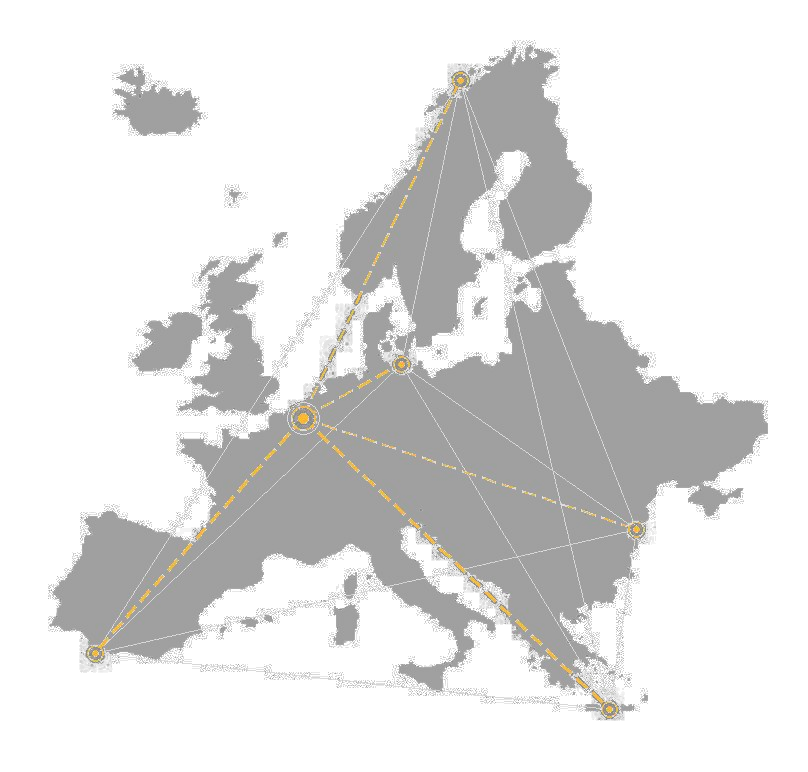
  • → Five hubs operational
G1
End of Year 7
Review

Independent mid-term review

F3
Year 8–15
Full capability
  • → FOC: ~100,000
  • → Consolidation
  • → Permanent Citadel
About ESDA

Author and background

Casper Jørn Jensen
Aarhus, Denmark · March 2026
ESDA is an original intellectual work. The proposal is not affiliated with any organisation or institution.

My name is Casper, and I am an ordinary Danish/European citizen from Aarhus with no professional military background. ESDA was developed in response to Europe's persistent failure to take responsibility for its own security at the level required to defend ourselves without US assistance. And it is precisely the will — and perhaps also the imagination — that is lacking, not the capability. Europe should not be independent of the United States because we should not be allied with them, but because it is fair both to Europe itself and to the United States that Europe does not depend on the US. The concept has been developed on the basis of open sources and original ideas — without institutional support or privileged access to information.

My hope is that a diagnosis with very concrete proposals for structure and implementation may prompt someone to seize the opportunity and become an advocate for the project. It is important — now and for the future — that Europe builds a shared capability that increases our collective security.

The report ESDA — European Security and Defence Alliance is a political-military analysis presenting a concrete treaty-based proposal for how Europe can build strategic agency within existing budget frameworks — without replacing NATO, and without starting from scratch. ESDA is not only the answer to what we already see — it is Europe's insurance against the unknown.

The proposal is designed to be discussed at the political level. The policy brief and infographic have been prepared for use in meetings with decision-makers and parliamentarians. ESDA is made freely available — the concept may be freely used, cited and developed further, ideally with attribution to the source.